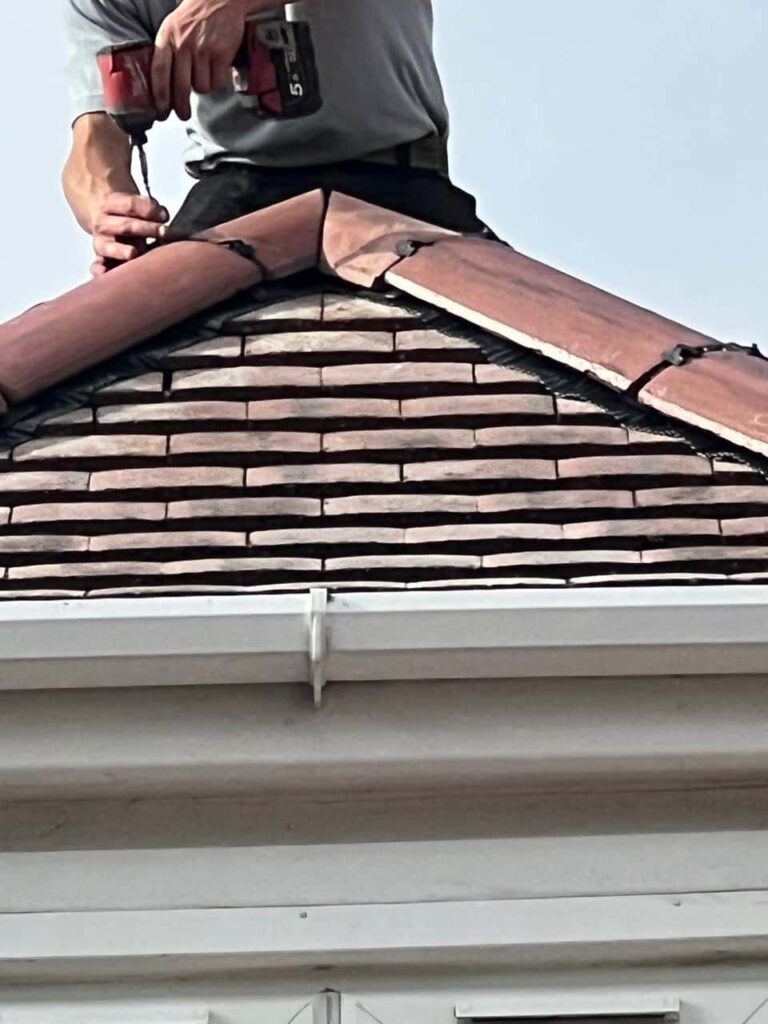
A loose tile around a chimney or along the ridge of a roof can require emergency attention, particularly if it is at risk of falling or has already exposed the roof to water ingress. Both areas are highly exposed to wind and rain, so a component that appears only slightly displaced can become more unstable when the weather changes.
The safest response is to arrange a prompt professional inspection. The urgency will depend on the tile’s position, the condition of its fixings or mortar and whether surrounding roofing materials have also been disturbed.
When Does a Loose Chimney or Ridge Tile Become an Emergency?
Not every loose tile creates an immediate internal leak. However, its elevated and exposed position means that delaying an assessment can allow a manageable defect to develop into a more serious roofing problem.
The Tile Could Fall from the Roof
A ridge tile sits at one of the highest points of a pitched roof. Tiles around a chimney are also positioned above the main roof slopes. If either becomes detached, it could fall onto lower tiles, guttering, a conservatory roof or the ground below.
Signs that a tile may be unstable include:
- A visible change in its position
- Gaps beneath the tile
- Cracked or missing bedding mortar
- Fragments of mortar on the ground
- Movement during windy conditions
- Damage to neighbouring tiles
A tile that appears likely to fall should be treated as urgent. People should be kept away from the area below until the roof has been assessed.
Rainwater Is Entering Through the Gap
Loose tiles can expose joints that were designed to direct rainwater away from the roof structure. Once an opening forms, water may reach the underlay, battens, timbers or insulation.
Possible internal warning signs include damp marks, dripping water, wet loft insulation and staining around the chimney breast. Active water ingress requires prompt attention because moisture can travel beneath the roof covering and affect a wider area than the original gap suggests.
The Tile Moved During Strong Winds
Wind can lift a tile when mortar, fixings or surrounding materials have weakened. Even if the tile remains on the roof, its original protection may have been compromised.
A displaced tile can also place pressure on adjoining components. Further wind may move it again or dislodge nearby tiles, so waiting for visible internal damage is rarely advisable.
The Ridge Mortar Is Crumbling
Traditional ridge tiles may depend on mortar bedding to hold them in position and seal the joints. Ageing mortar can crack, loosen or separate from the tile. A ridge may therefore look complete from ground level while sections are no longer firmly secured.
Repairing only the most visibly damaged joint may not be sufficient if adjacent mortar has also deteriorated. A professional assessment can determine how much of the ridge requires attention and whether the affected tiles remain suitable for reuse.
The Chimney Junction Is No Longer Weatherproof
Water around a chimney does not always enter through the tile itself. Movement may disturb the surrounding leadwork, mortar or adjoining roof covering. These details must work together to direct water safely down the roof.
If staining appears near a chimney, the inspection should consider the complete junction rather than assuming that one visible tile is the sole cause. Correctly identifying the entry point helps prevent repairs being carried out in the wrong place.
What Should You Do After Spotting a Loose Tile?
Do not climb onto the roof or attempt to push the tile back into place. Surrounding materials may also be unstable, and a roof cannot be assessed safely from the ground alone.
Where practical, keep the area beneath the suspected tile clear. Check the loft or upper rooms for moisture without disturbing electrical fittings or damaged materials. Note whether the problem appeared after wind or rain, as this information may assist the roofing contractor.
What Will a Roofer Inspect?
A proper assessment should examine more than the displaced component. Depending on its position, the roofer may inspect:
- The tile and its original fixing
- Adjacent tiles and ridge sections
- Mortar bedding or mechanical fixings
- Leadwork around the chimney
- Roof underlay and battens where accessible
- Internal signs of moisture
- Damage caused by falling fragments
This wider inspection helps establish whether a targeted repair is appropriate or whether surrounding materials also require attention.
Why Prompt Repairs Protect the Wider Roof
Securing or replacing a loose tile restores the roof’s continuous weatherproof covering. It also helps prevent water, wind and movement from affecting neighbouring sections.
Addressing the defect early may limit damage to battens, underlay and internal finishes. More importantly, the repair can correct the reason the tile became loose rather than simply returning it to position temporarily.
Conclusion
A loose chimney or ridge tile becomes an emergency when it could fall, is allowing water inside or has been significantly displaced. Even without an active leak, its exposed location means that a prompt inspection is the sensible course of action.
LJ Roofing Royal Wootton Bassett provides professional roof inspections and targeted repairs in Royal Wootton Bassett, Wiltshire. If you have noticed a loose tile, damaged ridge mortar or signs of water ingress, contact our team to arrange an assessment.
Call us on: 01793 569 596
Click here to find out more about LJ Roofing Royal Wootton Bassett.
Click here to complete our contact form and see how we can help with your roofing needs.